
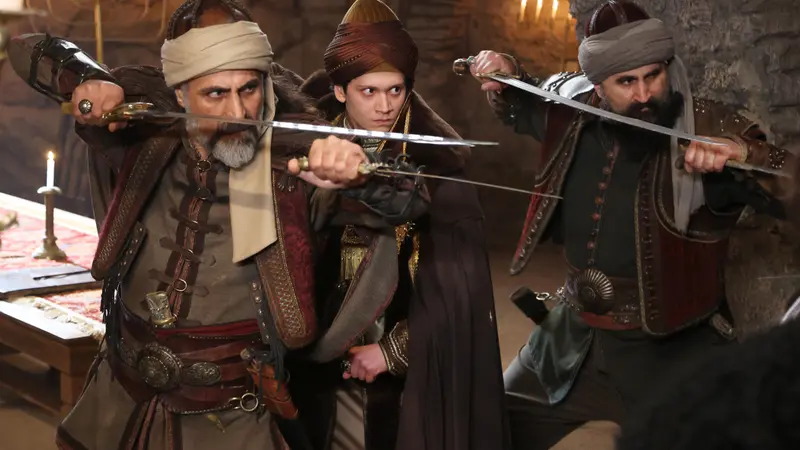
The Ottoman political chessboard is about to witness its most dangerous move yet. As Mehmed Fetihler Sultanı Episode 69 approaches its February 10, 2026 release, the fallout from Episode 68’s explosive revelations promises a clash between diplomatic cunning and raw battlefield violence that will reshape the entire Bosnian campaign.
Check Also: Kurulus Orhan Episode 14 English and Urdu Subtitles
English Subtitles:
Urdu Subtitles:
Episode 68 Recap: The Trap Within The Trap
Mehmed Fetihler Sultanı Episode 68 delivered a masterclass in Ottoman strategic thinking. Sultan Mehmed Han didn’t just intercept the Hungarian gold shipment—he orchestrated a multi-layered operation that turned enemy alliances into liability. The capture of Queen Katarina alongside three million gold coins wasn’t merely tactical opportunism. It was calculated psychological warfare designed to starve the Hungarian-Bosnian alliance of resources while sowing distrust among Christian coalition members.
The Divan-ı Hümayun opening prayer set the thematic foundation: “Every door’s key is prayer, but afterward, the work belongs to the servant.” This philosophy guided every decision that followed. When Ali Bey brought news of King Matthias Corvinus sending massive Hungarian reinforcements to Bosnia, the Sultan didn’t react with panic. Instead, he revealed preparedness that bordered on prescience.
Bahadır Paşa’s ambush on the gold convoy demonstrated Ottoman intelligence superiority. But the real genius emerged in Sultan Mehmed’s refusal to immediately march to war despite pressure from commanders like Zanos Paşa. The Sultan recognized that time itself had become a weapon—every day the Hungarian army waited without pay and provisions would breed internal conflict.
English Subtitles:
Urdu Subtitles:
Şehzade Bayezıt’s Deadly Mission to Ragusa
The assignment of Şehzade Bayezıt to Ragusa represents Sultan Mehmed’s most audacious gamble. The young prince wasn’t sent merely to negotiate with Ragusan Jewish merchants who financed the Christian coalition. He was dispatched as a living symbol of Ottoman resolve—a message that the Sultan valued this mission enough to risk his own bloodline.
İshak Paşa made the strategic calculation clear in the Divan: these five merchants controlled European war financing. Their ledgers held more power than a dozen fortresses. Cutting their support wouldn’t just weaken the Hungarian army—it would collapse the entire credit system sustaining anti-Ottoman operations across the Balkans.
But Vlad Dracula had other plans. His appearance in Ragusa’s closing moments wasn’t coincidence—it was carefully orchestrated betrayal. The Wallachian voivode’s chilling declaration to Bayezıt revealed the depth of his strategy: “Today you’ll die here, and your beloved father will march to that long-awaited campaign.”
The Ragusa Merchant Council’s Hidden Power
The Ragusan merchant leadership operates from a fortified stronghold that has never faced military assault. Their spokesman’s arrogant dismissal of Ottoman threats—”No war begins or ends without our gold”—reflects genuine geopolitical influence built over generations of conflict financing.
These merchants don’t simply lend money. They manipulate international debt structures to control military outcomes. Their threat to Şehzade Bayezıt carried weight: close Constantinople’s trade routes, embargo Ottoman merchants, and strangle the empire’s commercial lifelines.
Sultan Mehmed understands this financial warfare perfectly. That’s why he sent his son rather than a vezir. The presence of an heir to the Ottoman throne signals that this negotiation isn’t optional—it’s a final warning before military annihilation.
Internal Threats: The Yeniçeri Corruption Scandal
While external enemies plot in Ragusa, internal rot threatens from within. Şehzade Mustafa uncovered a criminal network led by Maksut and İrfan Ağa that has been extorting merchants, manipulating military supplies, and corrupting the Yeniçeri corps with usury operations disguised as charitable lending.
The scheme’s sophistication shocked even Sultan Mehmed. These rogue elements established a parallel financial system inside the army itself, lending money at 200% interest while staging fake disasters to justify their predatory loans. Baharatçı Adem Efendi’s flooded warehouse and Demirci İbrahim Efendi’s ambushed caravan were both fabricated crises designed to trap desperate merchants.
Doğan Paşa recognized the cancer immediately: “When warriors start earning more in the city than on campaign, the sword rusts and discipline dies.” The Yeniçeri were being transformed from elite soldiers into urban racketeers.
Sultan Mehmed’s response demonstrated his understanding of leadership psychology. Rather than handle the matter himself, he delegated judgment to Şehzade Mustafa, forcing his son to balance mercy with justice in front of the entire corps. The young prince’s decision would define his fitness for future command.
Vlad’s Master Plan: Provoking The Sultan
Vlad Dracula’s strategy operates on intimate knowledge of Sultan Mehmed’s character. The Wallachian prince understands that the Sultan won’t march to Bosnia merely over lost gold or captured queens. But a dead son? That would ignite rage no amount of strategic patience could contain.
Vlad’s earlier sabotage of Queen Katarina’s rescue convoy through his brother Radu served this larger purpose. Every setback strengthens the narrative that only overwhelming Ottoman force can resolve the Bosnian situation. By killing Bayezıt in Ragusa and sending his bloodied kaftan to the Sultan, Vlad aims to transform measured strategy into vengeful fury.
Kral Stefan initially resisted this extreme approach, but Vlad’s response revealed his ruthlessness: “Loyalty matters above everything—I recognize neither brother nor mother when it comes to that.” This willingness to sacrifice family for strategic advantage mirrors Sultan Mehmed’s own pragmatism, making them perfect antagonists.
Sultan Mehmed’s Counter-Intelligence Web
Episode 68 revealed that Sultan Mehmed anticipated every move. Radu’s supposed betrayal was actually a deep-cover operation authorized by the Sultan himself. The young Wallachian prince’s mission: infiltrate the Christian alliance, feed disinformation, and create fractures between Hungarian and Bosnian leadership.
Bahadır Paşa’s decision to let Queen Katarina escape after capturing her wasn’t battlefield incompetence—it was calculated statecraft. Her return to Bosnia empty-handed would intensify tensions with Hungarian commanders who expected the gold she no longer possessed.
This layered deception explains why Sultan Mehmed remained so confident despite apparent setbacks. He wasn’t reacting to enemy moves—he was choreographing them.
The Diplomatic Marriage: Gülşah and Princess Rose
Sultan Mehmed’s planned marriage to Princess Rose of Bosnia represents another strategic dimension. Gülşah Hatun’s pregnancy complicates the political timing, but she herself recognized the necessity: “If your dream was Constantinople then, your dream is Bosnia now. I’d rather your vision lives than my heart breaks.”
This mirrors the earlier Karamanoğlu marriage alliance that ended decades of conflict through dynastic union. A Bosnian princess as Ottoman sultana would neutralize resistance among Christian nobility and provide legitimacy for Ottoman governance structures.
Mahmud Paşa understood the calculation perfectly. Rose’s symbolic value outweighed any personal consideration. Her acceptance would save thousands of Bosnian lives and prevent the humanitarian catastrophe of prolonged siege warfare.
Mehmed Fetihler Sultanı Episode 69 Predictions: The Ragusa Showdown
February 10, 2026 will deliver the confrontation building since Episode 62. Şehzade Bayezıt faces impossible odds in Ragusa with only Bali Bey and Şamil Bey for protection. Vlad’s ambush will test not just the prince’s combat skills but his diplomatic composure under lethal pressure.
The Ragusan merchants present a separate challenge. Their fortress remains impregnable to conventional assault, and they correctly assess that killing an Ottoman prince would bring annihilation. But Vlad’s presence changes the equation—he wants that very result.
Expect Mehmed Fetihler Sultanı Episode 69 to split between three parallel storylines: the Ragusa crisis, Şehzade Mustafa’s judgment of the corrupt Yeniçeri, and Sultan Mehmed’s preparation for the inevitable Bosnian campaign. Each thread will converge toward a singular question: Can strategic patience withstand personal tragedy?
Character Development: Şehzade Bayezıt’s Crucible
This episode represents Şehzade Bayezıt’s transition from administrator to warrior-diplomat. His Amasya governorship prepared him for political complexity, but Ragusa demands synthesis of negotiation skill and battlefield awareness.
İshak Paşa’s counsel emphasized both: “For those who understand, use eloquent tongue. For those who don’t, use sharp sword.” Bayezıt must determine which approach the Ragusans deserve before Vlad’s ambush eliminates all choices.
The prince’s earlier scene with Mustafa Paşa revealed his insecurity about lacking battlefield glory compared to his Pontus achievements. Ragusa will provide that test under the worst possible circumstances—outnumbered, surrounded, and facing an enemy who knows every street and building.
Historical Context: Ragusa’s Unique Position
Medieval Ragusa (modern Dubrovnik) maintained independence through diplomatic brilliance and commercial indispensability. The city-state paid tribute to the Ottoman Empire while maintaining trade relationships with Christian powers, essentially acting as a neutral financial hub for all sides.
The five Jewish merchant families referenced in the series controlled Mediterranean trade financing. Their loans funded crusades, mercenary armies, and naval expeditions. Cutting their support would indeed cripple Christian military operations across the region.
Sultan Mehmed’s approach reflects historical Ottoman strategy of economic warfare preceding military action. The 1463 Bosnian campaign actually followed similar patterns of isolating enemy finances before invasion.
Thematic Elements: Justice Versus Mercy
Şehzade Mustafa’s courtyard judgment explores the series’ central question: How does a ruler balance compassion with deterrence? The corrupt Yeniçeri deserve punishment, but mass executions would demoralize the army before a major campaign.
Mustafa’s solution demonstrates wisdom beyond his years: “Mercy that opens doors to treason becomes oppression. Forgive those who violate people’s rights and destroy state order, and justice becomes orphaned.”
This philosophy mirrors his father’s approach to Ragusa. Sultan Mehmed offers negotiation first, but makes clear that refusal brings destruction. The key is ensuring enemies understand the difference between patience and weakness.
Mehmed Fetihler Sultanı Episode 69 Releasing Details and Where to Watch
Release Date: February 10, 2026
Platform: TRT 1 (Turkey)
Subtitles: English and Urdu subtitles available at vidtower.in
Episode Number: 69
Expected Duration: 120-140 minutes
Vidtower.in has established itself as the reliable source for same-day subtitle releases, typically uploading within 2-3 hours of the Turkish broadcast. Both English and Urdu translations maintain high accuracy while preserving the poetic dialogue that defines this series.
Production Quality and Historical Accuracy
Mehmed Fetihler Sultanı continues balancing dramatic narrative with historical authenticity. The Ragusa sequences required extensive location scouting to capture the Dalmatian coast’s distinctive architecture. The merchant stronghold design reflects actual Ragusan defensive structures that combined Italian and Byzantine influences.
Costume design for the Jewish merchant council drew from 15th-century Sephardic traditions, while the Hungarian armor worn by King Matthias Corvinus’s troops accurately represents Central European military technology of the 1460s.
Fan Theories: Will Bayezıt Survive?
Online communities are divided on Şehzade Bayezıt’s fate. Some argue his death would provide the narrative catalyst for Sultan Mehmed’s Bosnian campaign, creating emotional stakes that justify the massive military commitment. Others note that killing a major character this early in the season would waste episodes of development.
A third theory suggests Bayezıt survives but suffers serious injury, requiring months of recovery that parallel the Sultan’s strategic waiting game. This would maintain dramatic tension while avoiding character elimination.
Historical records confirm Bayezıt lived well beyond this period, but the series has demonstrated willingness to alter timelines for narrative impact.
The Bigger Picture: Ottoman Grand Strategy
Mehmed Fetihler Sultanı Episode 69 will illuminate how each tactical decision serves Sultan Mehmed’s vision of permanent Balkan pacification. The Ragusa mission, the internal purge, and the marriage alliance aren’t separate policies—they’re coordinated elements of a comprehensive strategy.
By targeting Christian coalition financing, Sultan Mehmed aims to make future resistance economically impossible. By purging corruption from his own ranks, he ensures military effectiveness. By offering political marriage, he provides defeated populations an alternative to annihilation.
This multi-dimensional approach explains why Pope Pius II’s crusade collapsed despite initial Hungarian enthusiasm. Financial, military, and diplomatic pressure applied simultaneously leaves enemies no viable response.
Conclusion: The Calm Before Total War
Mehmed Fetihler Sultanı Episode 69 represents the final moment before the storm. Sultan Mehmed’s patience has isolated his enemies, drained their resources, and positioned his forces for decisive action. But Vlad’s ambush threatens to transform careful planning into desperate vengeance.
The episode will answer whether strategic discipline can survive personal tragedy, or whether even the great Fatih Sultan Mehmed has limits to his composure. Either outcome will reshape the entire Bosnian campaign and define the second half of this season.
For viewers seeking the complete experience with English and Urdu subtitles, vidtower.in remains the essential resource. The February 10, 2026 broadcast promises to be one of the season’s most intense episodes, combining political intrigue, battlefield action, and emotional confrontation in the epic storytelling that has made this series unmissable viewing.
