
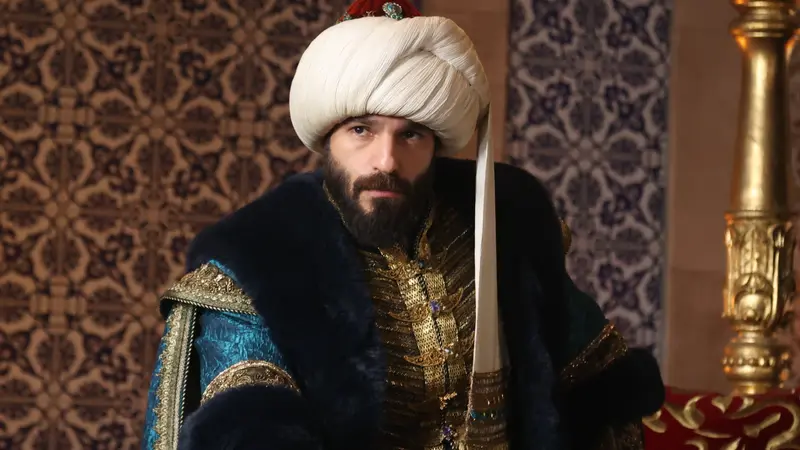
Mehmed Fetihler Sultanı Episode 68 witnesses Sultan Mehmed’s bold restructuring of power, the brutal Bogomil massacre orchestrated by Vlad Dracula and Catholic forces, and Princess Rose’s desperate fight for survival as political machinations reach a devastating climax.
Episode Release Date: February 3, 2026
There are moments in historical drama when everything shifts—when leadership is tested, alliances crumble, and the path forward demands both courage and sacrifice. Mehmed Fetihler Sultanı Episode 68 (Season 3, Episode 18) delivers exactly that kind of transformative storytelling. As I watched this episode unfold, I found myself gripping my seat during scenes of political upheaval in the Ottoman court and heart-wrenching tragedy in the Bogomil villages of Bosnia.
For fans following this epic series on platforms like Vidtower.in, this episode marks a genuine turning point—not just in the season’s arc, but in how we understand Sultan Mehmed’s vision of leadership during one of history’s most complex periods.
English Subtitles:
The Story Without Spoilers: Key Narrative Threads
The Leadership Test: Sultan Mehmed’s Decisive Moment
- Sultan Mehmed faces one of his most challenging leadership crises as the Janissary corps openly rebels against Grand Vizier Mahmut Pasha during the dish-looting ceremony
- The young sultan must balance his commitment to military tradition with the need for administrative reform and strategic clarity
- His decision to remove Mahmut Pasha and appoint Ishak Pasha as the new Grand Vizier demonstrates political maturity—acknowledging failure while maintaining authority
- The episode brilliantly captures the weight of absolute power: every decision carries consequences that ripple through the empire

Tribal Politics and Shifting Loyalties
- The Janissary discontent reveals deeper fractures within the Ottoman military structure—questions of honor, compensation, and respect for the fighting class
- Ishak Pasha’s approach to the troops contrasts sharply with his predecessor’s methods, using storytelling and empathy rather than mere command
- His parable about the sheep and the experienced ram serves as a masterclass in leadership communication
- The introduction of the “sandık” (chest) system for sharing war spoils shows innovative thinking about military welfare
The Enemy’s Devastating New Strategy
- In Bosnia, the Catholic alliance—led by Pope, Queen Katerina, King Stefan, and Vlad Dracula—executes a horrifying plan to eliminate the Bogomil population
- Vlad Dracula’s manipulation reaches new heights as he stages his own innocence before the Pope while orchestrating mass murder
- The nighttime assault on Bogomil villages is brutal and systematic, showing the ruthlessness of religious persecution
- Princess Rose’s desperate defense and eventual rescue by Bahadır Pasha and the Akıncı forces provides a glimmer of hope amid tragedy
Emotional Depth: Personal Costs of Political Games
- The episode doesn’t shy away from showing the human cost of political maneuvering—mothers clutching children as their villages burn, warriors questioning their purpose
- Lütfi’s impending marriage to Reyhan adds a tender counterpoint to the violence, reminding us that life continues even in wartime
- Radu’s conflicted loyalty between his brother Vlad and Sultan Mehmed creates psychological complexity—his near-assassination experience forces him to choose sides
- Sultan Mehmed’s private moments with scholars like Ali Kuşçu reveal his intellectual aspirations beyond mere conquest
Why This Episode Matters: Character Arcs and Season Foundation
Mehmed Fetihler Sultanı Episode 68 serves as a crucial hinge point in the season’s narrative architecture. Sultan Mehmed’s willingness to replace his Grand Vizier mid-campaign demonstrates a level of political courage that historical sources confirm about the real Mehmed II. The show doesn’t present him as infallible but as someone willing to correct course when necessary.
The Bogomil massacre storyline grounds the series in the harsh religious politics of 15th-century Europe. By showing the Pope’s direct involvement in sanctioning violence against heretics, the episode illuminates the complex religious landscape that made the Ottoman Empire’s relative tolerance appear revolutionary to many persecuted communities.
Princess Rose’s transformation from Bosnian nobility to refugee mirrors countless historical figures caught between empires. Her journey toward the Ottoman court (as foreshadowed by Bahadır Pasha’s orders) will likely become a significant subplot exploring themes of conversion, survival, and identity.
The introduction of Ali Kuşçu, the renowned Uzbek astronomer and scholar, signals the series’ intention to highlight Mehmed’s patronage of science and learning. His assignment to create a military campaign calendar based on astronomical calculations shows how Islamic civilization integrated scientific knowledge into practical governance.
Cinematography & Action: Visual Storytelling at Its Peak
The production team deserves enormous credit for this episode’s visual composition. The contrast between the opulent Ottoman court and the burning Bogomil villages creates a powerful juxtaposition that underscores the episode’s central themes.
Court Scenes: The camera work during the Janissary rebellion is particularly effective, using tight close-ups on Sultan Mehmed’s face to capture his internal calculation. You can see the wheels turning as he weighs tradition against pragmatism. The staging of Mahmut Pasha’s public dismissal—the removal of the seal, the black robe—follows Ottoman protocol with historical accuracy that history enthusiasts will appreciate.
Battle Sequences: The nighttime raid on the Bogomil villages employs handheld camera work that immerses viewers in the chaos. The use of fire as both literal destruction and symbolic purification (from the Catholic perspective) is visually striking. Rose’s defense of her people, shot with dynamic angles that emphasize her determination despite impossible odds, ranks among the series’ most compelling action sequences.
Costume Design: The distinction between Ottoman court dress, Janissary uniforms, European royal attire, and Bogomil civilian clothing helps viewers track the episode’s multiple storylines. Ali Kuşçu’s Central Asian attire particularly stands out, visually representing the cultural bridge between Turkic peoples.
Facial Expressions: The director clearly instructed actors to convey emotion through subtle facial work. Watch Vlad Dracula’s micro-expressions during his papal audience—the brief flash of triumph when his deception succeeds, quickly masked by pious humility. Similarly, Sultan Mehmed’s controlled fury during Mahmut Pasha’s dismissal speaks volumes through restrained performance rather than theatrical anger.
Final Verdict: Why Episode 68 Is a Must-Watch
Mehmed Fetihler Sultanı Episode 68 exemplifies what historical drama should aspire to: entertainment that educates, action that serves character development, and political intrigue that illuminates real historical dynamics.
For newcomers, this might seem like a challenging entry point given its heavy focus on ongoing storylines, but the episode’s self-contained dramatic arcs—particularly the Grand Vizier change and the Bogomil tragedy—work as standalone narratives.
For longtime viewers, this episode rewards your investment with significant plot progression and character development. The pieces are clearly being positioned for the major Bosnian campaign that dominated Mehmed II’s mid-reign.
The episode successfully balances multiple tones: the ceremonial gravity of Ottoman statecraft, the intellectual excitement of scientific patronage, the horror of religious persecution, and the intimate warmth of personal relationships. This tonal range keeps the pacing dynamic even during a dialogue-heavy episode.
Rating: 9/10 – A masterfully constructed episode that advances the season’s narrative while delivering emotional impact and historical insight. The Bogomil massacre sequences are difficult to watch but important for understanding the era’s religious conflicts. The leadership transitions within the Ottoman court provide fascinating political theater grounded in historical reality.
Whether you’re a fan of political intrigue, military history, or character-driven drama, Mehmed Fetihler Sultanı Episode 68 delivers on all fronts. It’s the kind of episode that reminds us why we fell in love with this series in the first place—respectful of history’s complexity while never forgetting that great storytelling requires great characters facing impossible choices.
Frequently Asked Questions
1. When does Mehmed Fetihler Sultanı Episode 68 release?
Mehmed Fetihler Sultanı Episode 68 (Season 3, Episode 18) releases on February 3, 2026. Fans can watch it on various streaming platforms including Vidtower.in with English subtitles.
2. Is the Bogomil massacre in Episode 68 based on historical events?
Yes, the persecution of Bogomils in Bosnia during the 15th century is historically documented. The Bogomils were a Christian sect considered heretical by both Catholic and Orthodox churches. As the Ottoman Empire expanded into the Balkans, many Bogomils actually converted to Islam, partly to escape persecution from European Catholic forces. The episode dramatizes this religious conflict that was central to Bosnian history.
3. Why did Sultan Mehmed remove Mahmut Pasha as Grand Vizier?
In the episode, Mehmed removes Mahmut Pasha because he failed to maintain discipline and unity within the Janissary corps before a major military campaign. The public rebellion during the dish-looting ceremony demonstrated that Mahmut had lost control of the military faction. Historically, the relationship between Mehmed II and Mahmut Pasha was complex, with periods of both trust and tension.
4. Who is Ali Kuşçu and why is he important in this episode?
Ali Kuşçu was a real historical figure—a renowned astronomer, mathematician, and scholar from Samarkand (in modern-day Uzbekistan). Mehmed II invited him to Constantinople where he made significant contributions to Islamic science. In Episode 68, Sultan Mehmed tasks him with creating a military campaign calendar based on astronomical calculations, showing the Ottoman Empire’s integration of scientific knowledge into governance and warfare.
5. What happens to Princess Rose after the Bogomil village attack?
Episode 68 shows Princess Rose being rescued by Bahadır Pasha and Ottoman Akıncı forces after the Catholic alliance’s brutal assault on Bogomil villages. Bahadır Pasha reveals that Sultan Mehmed has ordered her to be brought to the Ottoman court. This sets up a significant storyline about her future role, likely exploring themes of refuge, religious identity, and political alliance between the Ottomans and persecuted Bosnian communities.
Mehmed Fetihler Sultanı continues to prove why it stands among the finest historical dramas in Turkish television. Mehmed Fetihler Sultanı Episode 68 raises the stakes while deepening our understanding of the characters who shaped an empire. The journey toward conquest continues, but as this episode reminds us, the real battles often happen in council chambers and burning villages, not just on distant battlefields.
