
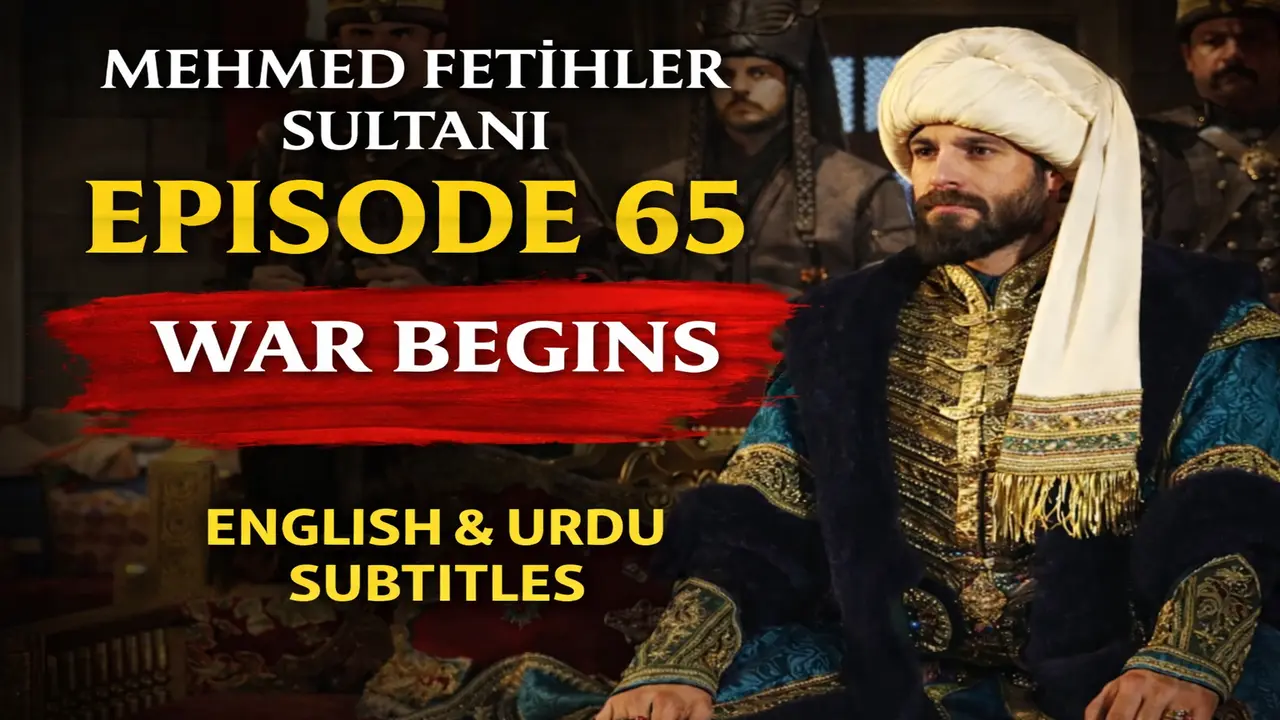
Mehmed Fetihler Sultanı Episode 65 escalates the Bosna crisis as Fatih Sultan Mehmet shifts from investigation to execution. With English and Urdu subtitles, the episode exposes betrayal inside the Yeniçeri Ocağı, deepens the Vlad Tepeş conflict, and locks the empire onto an irreversible war path.
Mehmed Fetihler Sultanı Episode 65 with English Subtitles
👇Download Now English subtitle👇
Mehmed Fetihler Sultanı Episode 65 with Urdu Subtitles
👇Download Now Urdu subtitle👇
Mehmed Fetihler Sultanı all episodes with English subtitles
📅 Episode 65 Release & Subtitles Information
- Episode Title: Mehmed Fetihler Sultanı Season 3 Episode 65
- Release Date: 13 January 2026
- Subtitles: English & Urdu
- Watch & Updates: Vidtower.in
International viewers searching for English subtitles first and Urdu subtitles shortly after will find Episode 65 listings and updates on Vidtower.in, where subtitle timing and episode publishing are tracked carefully.
Episode 64 full review and recap
Episode 65 Review: When Strategy Ends and Judgment Begins
If Episode 64 was about uncovering betrayal, Episode 65 is about deciding who pays for it.
This episode marks a tonal shift. The narrative moves away from hidden letters, covert alliances, and palace whispers—and steps directly into state judgment. Fatih Sultan Mehmet Han no longer waits for proof to arrive at his door. He orders the empire forward.
The message is clear:
Once the truth is seen, delay becomes disobedience.
Fatih Sultan Mehmet: From Ruler to Executioner of Policy
One of the strongest aspects of Episode 65 is how it reframes Fatih Sultan Mehmet.
He is no longer portrayed as a Sultan reacting to chaos. Instead, he becomes the final mechanism of order.
Key leadership traits highlighted:
- Refusal to tolerate institutional rot
- Direct intervention in Yeniçeri Ocağı discipline
- Clear separation between mercy for the innocent and punishment for betrayal
This is not emotional revenge. It is statecraft.
The episode repeatedly reinforces that the Sultan’s patience was a test—and that test has ended.
The Bosna Situation: Diplomacy Collapses
Bosna remains the central geographic and moral battlefield of Episode 65.
The aftermath of the failed massacre plot exposes something more dangerous than violence:
international manipulation.
- Papal influence is no longer implied—it is operational
- Macar alliances begin to solidify
- Kral Stefan is shown as a ruler who traded truth for survival
What changes in Episode 65 is Ottoman clarity.
Bosna is no longer treated as a misunderstanding. It is treated as defiance.
This transition prepares viewers for a prolonged Balkan campaign rather than a single punitive strike.
Vlad Tepeş: The Enemy Who Thrives in Chaos
The Vlad Tepeş storyline becomes darker and more focused in Episode 65.
Unlike Episode 64, where his presence felt indirect, Episode 65 frames Vlad as:
- A destabilizer of borders
- A manipulator of fear
- A liability no empire can afford to ignore
His methods—public cruelty, symbolic violence, and psychological warfare—are contrasted sharply with Ottoman legal authority.
The show makes an important point:
Vlad does not rule through loyalty. He rules through terror.
And terror invites conquest.
The Yeniçeri Ocağı: Loyalty Under Surveillance
A major internal arc of Episode 65 is the silent crisis inside the Yeniçeri Ocağı.
Hüseyin Ağa’s Appointment Tested
While Hüseyin Ağa was appointed in Episode 64, Episode 65 tests his authority.
We see:
- Resistance masked as tradition
- Obedience that feels conditional
- Eyes watching from every corner
At the same time, the episode strongly implies that Mahmut Paşa believes he has influence inside the Ocak.
This creates a dangerous triangle:
- Sultan Mehmet enforcing order
- Mahmut Paşa playing long politics
- Hüseyin Ağa standing between command and collapse
Episode 65 does not resolve this tension—it sharpens it.
Mahmut Paşa: Power Without a Banner
If Fatih Sultan Mehmet represents visible authority, Mahmut Paşa represents shadow governance.
In Episode 65:
- He never openly rebels
- He never fully submits
- He waits
The brilliance of the writing lies in how Mahmut Paşa is never proven guilty—yet never feels innocent.
This ambiguity strengthens the narrative and sets up future internal conflict that could rival the external wars.
Why Episode 65 Feels Heavier Than Previous Episodes
Episode 65 carries weight because it removes hope of reversal.
Key narrative shifts:
- No more “misunderstandings”
- No more delayed justice
- No more safe neutrality
Every faction must choose:
- Obedience or annihilation
- Truth or convenience
- Empire or extinction
This is where the series transitions from political drama to imperial campaign storytelling.
📜 Historical Context (Short Timeline)
- 1453: Constantinople falls under Fatih Sultan Mehmet
- Post-1453: Balkan stabilization begins
- Bosna & Eflak: Become pressure points due to religion and alliances
- Vlad Tepeş: Historical vassal turned destabilizer
- Episode 65: Marks the formal beginning of uncompromising Ottoman response
People Also Ask (FAQs)
Is Mehmed Fetihler Sultanı Episode 65 available with English and Urdu subtitles?
Yes. English subtitles typically appear first, followed by Urdu subtitles on trusted platforms such as Vidtower.in.
What is the main focus of Episode 65?
Episode 65 focuses on judgment and execution of policy, shifting from investigation to open imperial action.
Does Episode 65 continue the Vlad Tepeş storyline?
Yes. Vlad Tepeş becomes a central threat, symbolizing chaos that demands military response.
Is Episode 65 action-heavy?
More than Episode 64. While still strategic, Episode 65 visibly prepares the ground for warfare.
